
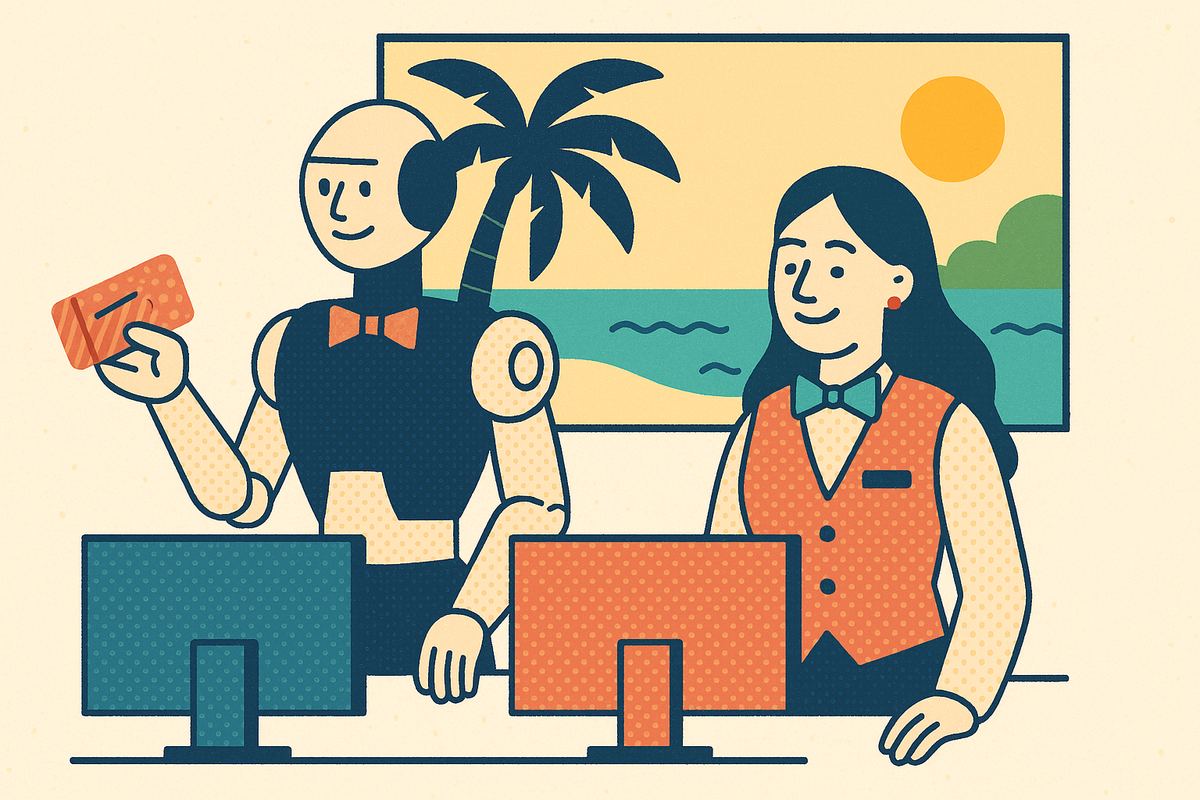
How AI visitor intelligence transforms guest satisfaction for hotels and attractions.
In hospitality industries where visitor expectations continue to rise, venue operators face mounting pressure to eliminate the barriers that stand between guests and exceptional experiences.
Specific factors impacting visitor satisfaction can include staff knowledge, safety, and pricing. Crowding and excessive waiting times can also directly reduce guest satisfaction. As digital solutions emerge to address these pain points, the most successful organizations are discovering that AI-powered visitor intelligence doesn't replace human connections — it dramatically enhances them.
Barriers that cost you return visits
Paper maps and generic information kiosks have become obsolete in today's competitive landscape. Industry analysis reveals that visitors arrive with fundamentally different expectations than they did years ago, particularly regarding digital guidance and personalization.
After working with hundreds of operators across Japan and Hawaii, what surprises me is how often guests actually check their digital maps — every 15 to 20 minutes during their visit.
"That's when I realized these aren't just navigation tools, they're the main way parks talk to their guests," says Takashi Nakaguchi, Nutmeg co-founder and CEO.
According to Oracle NetSuite, almost two-thirds of travelers now book accommodations specifically based on access to local experiences. This highlights how today's guests refuse to tolerate long waits, confusing navigation, or impersonal interactions that waste their limited time at your attraction.
There are three critical satisfaction barriers that directly impact your bottom line.
- Navigation frustration. When guests spend excessive time trying to find their way around, they experience less of your attraction, spend less money, and leave with negative impressions. Wayfinding difficulties significantly diminish guest satisfaction and reduce the likelihood of return visits.
- Waiting and crowding. Excessive wait times and crowding create significant negative impacts on visitor satisfaction. Even a perception of crowdedness can impact visitor flow trends and satisfaction levels.
- Impersonal experiences. Today's visitors arrive expecting personalized attention that acknowledges their unique preferences. Generic, one-size-fits-all approaches increasingly drive negative reviews and reduce return visitation.
Overcoming barriers with AI
Forward-thinking attraction operators are responding to these satisfaction barriers with a new approach that leverages AI visitor intelligence to empower their teams.
The most innovative strategy doesn't simply deploy more technology — it uses AI-gathered visitor insights to transform how staff engage with guests. When frontline team members receive real-time data about visitor preferences, movement patterns, and engagement, they can deliver personalized interactions that feel remarkably intuitive.
According to McKinsey research, 71% of consumers expect companies to deliver personalized interactions, and 76% get frustrated when they don't. Data-informed human connection creates experiences that neither technology alone nor uninformed staff could achieve independently.
Creating genuine human moments
The real breakthrough comes when AI-powered systems gather visitor intelligence that informs meaningful staff-guest interactions. Your digital concierge doesn't just direct visitors — it collects valuable data that empowers your team to deliver exceptional moments. Below are three examples of how your team can use aggregated guest data and historical patterns to offer more personalized recommendations.
- Family activity timing patterns. Data shows that families with teenagers consistently book adventure activities in the morning but struggle to find engaging options for mixed-age groups in the afternoon. When front desk staff see a family checking in with teens, they can proactively suggest booking adventure activities early in the day, then a family cooking class or beach volleyball tournament later.
- Business traveler service preferences. Trends reveal that solo business travelers who stay three or more nights typically use the fitness center early in the morning, prefer quiet workspace areas over the lobby, and frequently ask about healthy dining options nearby. When a guest fits this profile at check-in, staff can offer early gym access, a quiet corner table in the business lounge, and walkable healthy restaurant recommendations.
- Weather-dependent guest flow. Historical data shows that when morning temperatures are above 85°F, families with young children start gravitating toward water rides and shaded areas by 11am, often missing popular attractions that become crowded later. Staff can steer families arriving on hot days to the popular ride first, then the splash zone.
These data-informed interactions don't just create better guest experiences — they also optimize your operations. When staff can anticipate guest needs based on behavioral patterns, they reduce repetitive questions, distribute crowds more evenly throughout your venue, and increase utilization of underused amenities or time slots. This proactive approach means fewer frustrated guests, smoother operations, and higher revenue from better resource allocation.
Finding the perfect operational balance
Breaking through satisfaction barriers doesn't require sacrificing operational efficiency. In fact, the most successful approach blends digital problem-solving with enhanced human engagement.
Your AI concierge can handle routine inquiries, wayfinding, and transactions — eliminating key friction points that cause frustration. Meanwhile, your staff receives intelligence that equips them for high-value guest interactions focused on creating memorable moments.
It's true that AI can handle many tasks, but human staff are still critical for providing the personal touches that transform a visit into an unforgettable experience.
This synergy addresses all three major satisfaction barriers simultaneously:
- Digital wayfinding reduces navigation frustration
- Virtual queuing and crowd management tools minimize wait times and perceived crowding
- Staff equipped with visitor intelligence deliver genuinely personalized interactions
Data-informed human connection
In a market where visitors have endless entertainment options, your ability to eliminate satisfaction barriers through data-informed human connections represents your greatest competitive advantage.
Some attractions are already using advanced systems to monitor how often staff members are engaging with visitors and identifying team members with the highest engagement rates. This emphasis on human connection skills, enhanced by visitor intelligence, increasingly determines which attractions thrive.
The most engaging frontline staff aren't those with rigid scripts — they're those with insights. When equipped with real-time visitor data, your team can create interactions that feel remarkably intuitive and personal.
Targeted implementation: first steps
Transforming your visitor experience doesn't require rebuilding everything at once. Begin by addressing specific satisfaction barriers through focused implementations.
- Target navigation frustration first. Implement digital wayfinding that provides personalized directions based on visitor location and preferences.
- Address wait time perception. Deploy virtual queuing and real-time updates that help visitors make informed decisions about their time.
- Equip staff with basic visitor intelligence. Start by giving frontline team members simple insights about guest preferences and past behaviors.
- Build more sophisticated intelligence over time. Gradually expand the visitor insights available to your team as you analyze which data points lead to the most meaningful interactions.
Creating lasting value
When competitors can replicate your physical attractions or standalone digital tools, they cannot easily duplicate the satisfaction breakthrough that happens when staff use visitor intelligence to create genuine human moments.
The most successful attractions aren't just adding technology — they're using AI concierge systems to strengthen what makes us fundamentally human: our desire for connection, understanding, and experiences that feel personally meaningful.
By enabling your staff with visitor intelligence, you position your venue not just as a collection of events and attractions, but as a place where guests feel genuinely understood and valued. This matters more than ever in today's experience economy, where the majority of Gen Z and Millennials prefer to spend money on experiences rather than things.
"The Japanese operators taught me something key — it's not about complex technology, it's about solving real problems that make guests want to stay longer," Takashi says. "Sometimes that's just showing them the shortest lines nearby."
Our platform equips your frontline teams with insights about guest preferences, movement patterns, and behavioral data, so they can proactively offer perfect activity timing, personalized recommendations, and smart crowd management that transforms every visit into a memorable experience. Learn more about Nutmeg for attractions.


